
By: Chris Theron, Global Organisational Excellence Consultant, Competitive Dynamics International
The Leadership Presence Paradox: Why Support Isn’t Enough
Every failed transformation I’ve studied had strong leadership support. Every successful one had something else entirely.
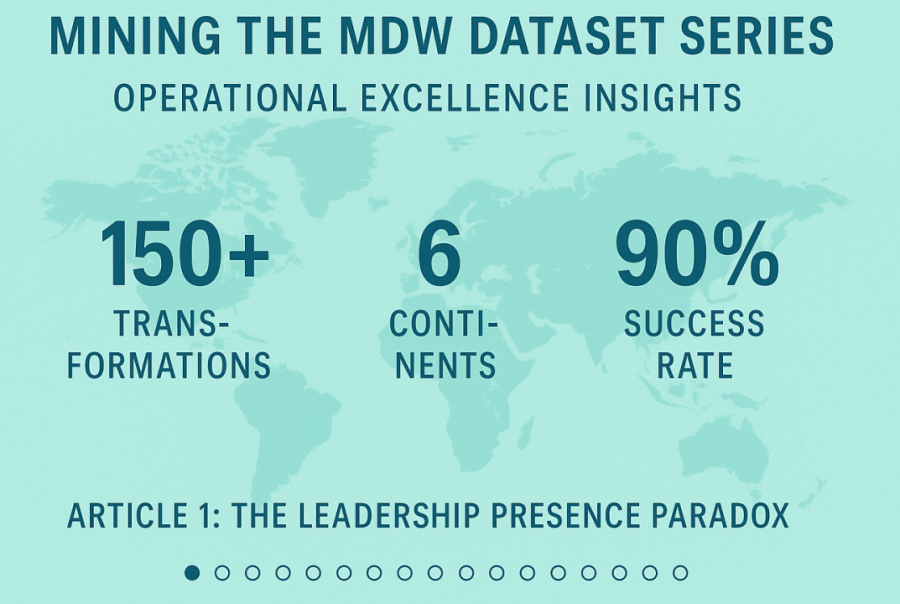
I’ve analysed over 150 operational excellence implementations across six continents, and one pattern emerges with uncomfortable clarity: leadership support doesn’t predict success. Leadership presence does.
The difference? Support is what you say. Presence is where you are.
The Comfortable Lie We Tell Ourselves
Walk into any struggling transformation and ask about leadership commitment. You’ll hear: “Oh yes, our CEO is fully behind this. She mentions it in every town hall.”
Then ask: “When did she last attend a team huddle?”
Silence.
Leadership support means endorsing the initiative, funding it, and talking about it. Leadership presence means changing your calendar, your location, and your daily habits to demonstrate that this matters more than everything else competing for attention.
What Presence Actually Looks Like
Shatterprufe: The Walkthrough Revolution
At Shatterprufe, leadership didn’t just support their Mission-Directed Work implementation – they conducted regular “walkthroughs” where managers gave direct feedback on the shop floor. Not monthly. Not when convenient. Regularly, predictably, where the work happened.
The result? 753 consecutive days without a lost-time accident (compared to 269 days before implementation). When leaders show up where safety matters, safety matters.
UTC Fire & Security: From Office to Gemba
UTC’s transformation began when managers stopped managing from their offices and started spending time at the gemba – where value is created. They attended daily huddles, not as observers but as participants.
The cultural shift was immediate. As one manager reflected: “We went from autocratic to participative in less than two years. Graphs do the talking now, not the managers.”
Karsten Group: Leaders as Models
At Karsten Group, leaders didn’t just ask teams to track performance – they tracked their own daily routines and performance. They made their personal development visible, demonstrating that accountability starts at the top.
The result: A culture where excellence became “how we do things” rather than “what we’re trying to do.”
The Research Validation
This isn’t just observational wisdom. James Kouzes and Barry Posner’s extensive leadership research shows that credibility is the foundation of leadership, and credibility comes from alignment between words and actions.
Their data is stark: Leaders who “model the way” achieve 2.3× better results than those who merely communicate vision.
Why? Because people don’t follow what you say – they follow what you do consistently, over time, when no one important is watching.
The Calendar Test
Here’s the brutal diagnostic that separates real commitment from good intentions:
Show me your calendar for the last month. I’ll show you your priorities.
- If transformation is your top priority, where are you spending time?
- If frontline engagement matters, when did you last have a meaningful conversation with someone who actually does the work?
- If this initiative is critical to your future, what did you stop doing to make room for it?
Your calendar doesn’t lie. Your rhetoric might, but your calendar won’t.
Why Presence Feels Harder Than Support
Support feels like leadership because it’s what we’ve been taught leadership looks like: vision casting, resource allocation, strategic direction.
Presence feels uncomfortable because it requires:
- Admitting you don’t know everything – You can’t learn from frontline teams if you already have all the answers
- Giving up control – Presence means influence, not authority
- Being vulnerable – Teams will see your reaction to problems in real time
- Changing your identity – From decision-maker to capability-builder
The Multiplication Effect
Here’s what our analysis reveals:
Leadership presence doesn’t just improve performance – it multiplies it.
When leaders show up consistently where work happens:
- Teams solve problems faster because help is immediate, not escalated
- Innovation increases because ideas get immediate feedback, not bureaucratic review
- Ownership deepens because people feel seen and valued, not managed and measured
- Learning accelerates because both leaders and teams adapt in real time
The Hard Question
If you’re leading a transformation initiative, ask yourself:
Are you supporting change, or are you present for change?
Support says: “This is important, make it happen.” Presence says: “This is important, let’s figure it out together.”
Support delegates transformation. Presence demonstrates transformation.
What This Means Monday Morning
Stop doing this:
- Talking about transformation in meetings with other leaders
- Asking for updates through reports and dashboards
- Waiting for problems to escalate to your level
Start doing this:
- Block time weekly to be where work happens
- Ask questions that help teams think, not questions that help you judge
- Make your own learning and mistakes visible to others
The Ultimate Truth
Transformation doesn’t happen because leaders support it. Transformation happens because leaders live it, visibly, consistently, in the places where transformation actually occurs.
Your presence is your message. Your consistency is your credibility. Your willingness to show up where work happens is what separates leaders who achieve breakthrough results from those who achieve well-intentioned failures.
The question isn’t whether you support transformation. The question is: where will you be when transformation needs you most?
What’s the difference between a leader who supports change and one who leads it?
We’d love to hear from you, so please share your experience.