
The Measurement Trap: Why Easy Metrics Drive Mediocre Results

Chris Theron
The most dangerous metrics in business are the ones that make you feel, or look good about mediocre performance.
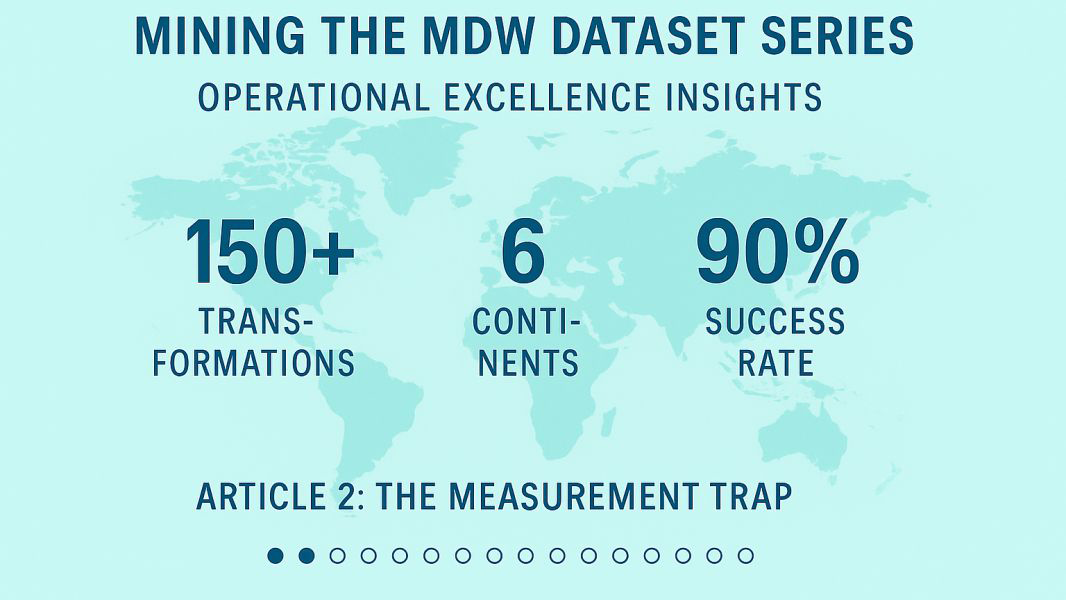
After analysing over 150 operational transformations, I’ve discovered an uncomfortable truth: the metrics that are easiest to track are often the least useful for driving change. There is even deeper problem: Too often metrics are chosen to control, where the answer lies in metrics that empower.
The Seductive Appeal of Easy Metrics
Easy metrics are everywhere:
- Financial results (last month’s performance)
- Compliance rates (did we follow the process?)
- Activity levels (how busy were we?)
- Satisfaction scores (how do people feel?)
They’re seductive because they:
- Require no new data collection
- Make leaders feel informed
- Generate impressive PowerPoint slides
- Avoid uncomfortable conversations
But here’s what our analysis reveals: organisations that rely on easy metrics get easy results. And when metrics are imposed rather than owned, even good metrics drive poor behaviours.
The Control vs. Empowerment Distinction
The most profound insight from successful transformations isn’t about what to measure – it’s about who chooses what to measure and why.
Control-Based Measurement:
- Metrics selected by superiors to monitor subordinates
- Focus on what teams did wrong or missed
- Creates defensive behaviours and metric gaming
- Generates compliance without ownership
- Keeps the spotlight off superiors’ performance
Empowerment-Based Measurement:
- Metrics chosen by teams, their leaders and their coaches to manage their own performance
- Focus on what teams can and needs to improve and is mostly within their control
- Creates proactive behaviours in short-term feedback loops and enables genuine improvement
- Generates ownership with natural accountability
UTi Material Handling: From Monitoring to Empowerment
When UTi Material Handling implemented Mission-Directed Work Teams across their 20+ mini-business units, they discovered something shocking: their existing KPIs were “not meaningful for team-level performance ownership.”
The breakthrough wasn’t just changing metrics—it was changing who controlled them. Instead of management tracking what teams accomplished, teams began choosing what they needed to improve. Guided by skilled coaching from their leaders, these metrics were always aligned with the highest priorities of the organisation.
Workers couldn’t influence financial results imposed from above, but they could absolutely impact safety incidents, quality checks, and problem-solving speed, which is what they decided to measure themselves.
The shift from imposed lagging indicators to self-selected leading indicators transformed both engagement and results.
The Fear Factor: When Metrics Become Self-Protection
There’s another insidious pattern in metric selection: choosing measures that make you look good rather than measures that drive improvement.
This happens when people fear reprimand from uninvolved but coercive management. The result? Metrics that:
- Highlight successes while hiding problems
- Focus on activities under control rather than outcomes that matter
- Create the appearance of progress without actual advancement
- Protect individuals at the expense of organisational learning and real progress
Nestlé’s Ownership Revolution
Across Nestlé’s global implementations, the most successful sites didn’t just move from lagging to leading indicators – they shifted from management-imposed to team-owned measurement:
Old Approach (Management Controls):
- Monthly profit reports teams couldn’t influence
- Annual customer satisfaction surveys teams couldn’t act on
- Quarterly innovation reviews disconnected from daily work
New Approach (Team Ownership):
- Hourly quality checks teams chose to implement
- Daily delivery performance teams wanted to control
- Weekly problem-solving cycles teams designed themselves
The result: Teams that felt connected to outcomes because they had chosen measures that they understand and how to improve it.
Volkswagen Paint Shop: The Psychology of Choice
Volkswagen’s Paint Shop transformation explicitly focused on “solutions within the team’s direct control.” But the real breakthrough was that teams participated in selecting which controllable factors to measure.
Instead of being told what management wanted tracked, teams identified:
- Defects they wanted to prevent
- Setup times they chose to optimise
- Safety incidents they decided to avoid
- Ideas they committed to implement
Results: Up to 89% defect reduction in some areas, because teams owned both the metrics and the improvement process.
The Four Tests of Empowering Metrics
Based on our analysis of successful transformations, empowering metrics pass four tests:
- The Ownership Test Question: Did the team participate in choosing this metric because it helps them improve their work? Red Flag: Metrics imposed “because management needs to know”
- The Control Test Question: Can the people being measured directly influence this metric through their daily actions? Red Flag: Measuring teams on outcomes they can’t control
- The Safety Test Question: Can people be honest about this metric without fear of punishment? Red Flag: Metrics that incentivise hiding problems or gaming numbers
- The Action Test Question: Does this metric suggest specific actions the team can take to improve? Red Flag: Metrics that create blame without enabling solutions
Why We Choose Control-Based Metrics (And Why We Shouldn’t)
The Illusion of ManagementControl-based metrics make leaders feel they’re managing performance, when they’re actually just monitoring reports. True performance management happens when teams manage themselves encouraged by keen and regular coaching from their leaders.
The Fear of Losing Control Many leaders worry that if teams choose their own metrics, they’ll pick easy ones. Our data suggests the opposite: when teams own improvement and don’t feel fear, they often set higher standards than management would dare impose.
The Comfort of Tradition “This is how we’ve always measured performance” feels safer than trusting teams to measure what matters to them.
The Hard Work of Empowering Measurement
Empowering metrics require:
Trust in Team Judgment
- Believing in your teams’ ability to choose meaningful metrics when given genuine ownership and true support
- Accepting that team-selected measures might be different from management preferences
Psychological Safety
- Creating environments where teams can measure problems without fear
- Ensuring metrics drive learning rather than punishment – revel in the RED.
Patience with Development
- Allowing teams to evolve their measurement choices as they mature
- Supporting metric refinement rather than demanding perfection through coaching
An inferior metric choice that is fully owned by a team, will outperform the most elegant imposed metrics.
What This Looks Like Monday Morning
Stop doing:
- Imposing metrics teams can’t influence
- Using measurement to catch people doing things wrong
- Selecting metrics that protect you from your boss
Start doing:
- Asking teams what they want to improve and how they’d measure it
- Using metrics to help teams solve problems, not report problems
- Measuring things that enable team success, not just management visibility
Ask yourself:
- Which of our metrics do teams genuinely own versus grudgingly comply with?
- What would teams choose to measure if they felt safe to be honest about problems?
- How do our metrics make teams feel – empowered to improve or afraid to fail?
The Multiplication Effect
Here’s what we’ve learned: organisations that empower teams to measure what matters don’t just get better metrics – they get better ownership.
When teams choose what to measure and own the improvement process:
- Problem-solving accelerates because teams aren’t defensive about issues
- Innovation increases because teams feel safe to experiment and measure results
- Performance sustains because improvement becomes intrinsically motivated
- Leadership effectiveness multiplies because teams manage themselves allowing leaders to adopt a supportive role
The Choice
You can use measurement to control performance, or you can use it to unleash performance.
Control-based metrics tell you what happened to teams. Empowerment-based metrics help teams influence what happens next.
The question isn’t whether measurement matters – it’s whether your measurements help your people feel trusted to manage their own excellence. Because once they do, they will always surprise you with what they can achieve.
What’s one metric your team complies with versus owns? What would they choose to measure if they felt genuinely empowered to improve their own performance?